
Spring Cleaning for the Soul: Caring for Our Body, Mind, and Spirit
When We Drift from Ourselves
Does anyone else love getting into all the nooks and crannies during a good Saturday spring-cleaning session? Let’s be honest: no one really notices brighter, whiter baseboards, but we still experience the satisfaction of having done the work. Another round of cleaning will inevitably be needed, but that’s part of the unspoken responsibility of stewardship: cleaning, maintenance, and improvement.
We’ve implicitly accepted the continuous upkeep required for our homes, cars, yards, and possessions, but we rarely acknowledge that we require similar rhythms of care ourselves.
This past week, I took a trip to the mountains with my family. It’s always soul-centering for me to unplug from the usual responsibilities of life, reconnect with family, and appreciate the magnitude of nature.
During one of our conversations, I was reminded of a message I had sent to family and friends last year. It was a hopeful declaration about the season ahead. Although I remembered the heart behind the message, I felt strangely disconnected from the person who wrote it. I felt homesick for that inspired and hopeful version of myself.
As life whirred by over the past few months, I neglected many of the practices that keep me centered and focused on who I want to become. Responsibilities piled up, distractions multiplied, and eventually my soul was in desperate need of a deep spring clean.
Being gently reminded of the type of person I want to be - someone unoffendable, encouraging, and full of grace - I could see how far I had drifted back into old habits. I had once again become someone who felt perpetually rushed, short-tempered, and easily irritated.
I thought that I had conquered those old behaviors, but soul work is a lot like housework. Once the clutter is removed, everything that remains still requires regular attention.
Just as we aren’t surprised when the floors need sweeping again, we shouldn’t beat ourselves up when the identities and values we’ve worked so hard to develop require maintenance too.
When it’s time for a soul spruce, we can take a comprehensive approach by addressing three key areas: Body, Mind, and Spirit.

Body - The Basics
Making small adjustments to physical health through a simple check-in is a quick, actionable way to ensure our basic needs are being met. It’s difficult to show up as our best when we’re exhausted, dehydrated, undernourished, and constantly low on energy. Unfortunately, this is all too easy to do when living a modern life fueled by the Standard American Diet.
Small improvements in these foundational areas can create a surprisingly significant payoff.
Here are the core questions I ask myself:
Am I well-rested?
Am I well-fueled?
Am I re-energized?
Rest: Sleep & Reset
Neuroscientist and sleep expert Matthew Walker once said that “the best bridge between despair and hope is a good night’s sleep.” Most of us know exactly what he means. Problems that feel insurmountable at midnight often seem far more manageable in the morning light.
That’s why I begin with a quick assessment of both the quantity and quality of my sleep. I evaluate not only my nighttime rest (circadian cycle), but also whether I’m finding moments of recovery and reset throughout the day (ultradian cycle).
Fuel: Nutrition & Hydration
Next, take a look at the quality of my fuel.
A jet requires a highly refined fuel to function properly. If you filled a jet with regular gasoline from the neighborhood gas station, catastrophic failure would likely follow. Thankfully, our bodies are far more resilient, but consistently consuming ultra-processed, manufactured food-like products eventually takes a toll, especially if we want to live a high-quality life.
I do a quick scan of the fridge and pantry. I prioritize protein and minimize foods that cause dramatic energy spikes and crashes. I also make sure I’m drinking plenty of water, especially first thing in the morning before coffee.
Energy: Exercise & Movement
Finally, I assess my exercise and movement.
I used to think of fitness as something I accomplished during my morning workout, but movement is far more dynamic than simply checking off gym sessions or tracking cardio minutes.
For me, optimal movement includes:
Focused exercise block
Stretching throughout the day
Prioritizing my step count (especially outdoors whenever possible)
Avoiding long periods of sitting
Creating intentional moments of recovery and breathwork
I don’t try to overhaul everything all at once. When I make a few tiny improvements to dial in my physical health, I find it’s easier to find the energy and motivation to work on my mental and spiritual health too.

Mind - The Reinforcements
We tend to overcomplicate it, but improving our mindset is surprisingly similar to improving our physical health. It requires awareness, intentional inputs, a clear vision for the future, and the willingness to keep going through the inevitable setbacks and failures. So I start with a metaphorical pantry overhaul to get the junk out, and get ready to pivot and push through the slips and trips with grace.
Here are the three questions I use to evaluate mindset:
What am I consuming?
Am I living here and now?
Am I focusing on my work?
Consumption: Get the Junk Out
What I consistently give my attention to will eventually shape my thoughts, emotions, and behaviors, so it needs to be aligned with what I want to create more of in my mind and my life.
Our ability to direct our focus is a skill that takes intentional practice to master. Instead of feeling overwhelmed by how far we still have to go, it’s more helpful to identify the ONE tiny next step we can take in the right direction.
If I want to become someone who is faithfully aligned, courageously loving, and resolutely inspired, then I need to spend time thinking about and consuming things that reinforce those values.
When we become intentional about the music, shows, books, conversations, and content we consume, we begin to realize how powerfully those inputs shape our inner world, and how much control and influence we have.
Presence: Be Here Now
When anxiety rises, I pause to take a centering breath and notice my thoughts.
Some days require this practice more often than others.
I notice if I am mindfully present or if I am ruminating on past mistakes or rehearsing future (nonexistent) problems.
Constructive reflection and thoughtful preparation are valuable exercises, but it’s worth noting how very different they are from the endless cycles of rumination and worry that leave us unsettled and emotionally exhausted.
Confidence doesn’t come from knowing how to solve every potential future problem. It comes from trusting that we will be equipped to handle the challenges we are called to face.
So I pause, take a breath, and return to the present when I notice myself drifting somewhere else.
Focus: Internal, not External
Another major source of unrest comes from obsessing over external circumstances outside our control.
Fixating on realities we cannot change creates needless suffering.
Author Byron Katie oftens says there are only three types of business: God’s Business, Your Business, and My Business. Most of us already have enough responsibility without carrying the emotional burden of trying to control circumstances or people we were never meant to manage.
When I feel frustrated, I pause and ask myself: “Is this actually my work to do?”
If yes, it’s time to take action. If not, it’s time to release it to God.
Sometimes I find myself slipping back into old behaviors, becoming reactive, defensive, or easily triggered by inconvenient circumstances or inconsiderate behaviors. It’s taken relentless work to become difficult to offend, quick to forgive, and more generous with grace.
When those old patterns creep back in, they remind me that transformation is not a finish line, but often requires ongoing maintenance.
Occasionally, we may have to build a temporary mental bunker for a season to detox from the noise of the status quo so we can immerse ourselves in healthier ways of thinking and living.
What we consistently put in eventually comes out, especially when life starts squeezing us.
Spirit - The Transformation
Of the three areas, spiritual health is the one I’ve found most important to evaluate regularly.
Our bodies and minds usually demand attention when something is wrong. Spiritual drift is often quieter. Without intentional attention, our spiritual sensitivity and receptivity can slowly become dull and distant.
Spiritual health is vital because it empowers everything else to work fully as it’s designed to.
These are the three spiritual checkpoints I return to regularly:
Where do I need more faith?
Where do I need more courage?
What do I need more wisdom?
Faith: Find God’s peace when I can’t control it
God has a beautiful design for us to live more fully. In many of our struggles, God is waiting for an invitation to lead.
The challenge is that surrender requires releasing control and being receptive to His direction.
Whether it’s relationships, finances, purpose, or meaningful work, God often wants to lead us into deeper flourishing than we could create on our own.
That surrender doesn’t exempt us from pain or hardship. But accepting the brutal truth of our reality while still believing God is sovereign multiplies our faith and deepens our awareness of His goodness in the middle of this broken world.
Courage: Taking resolute action when it’s time
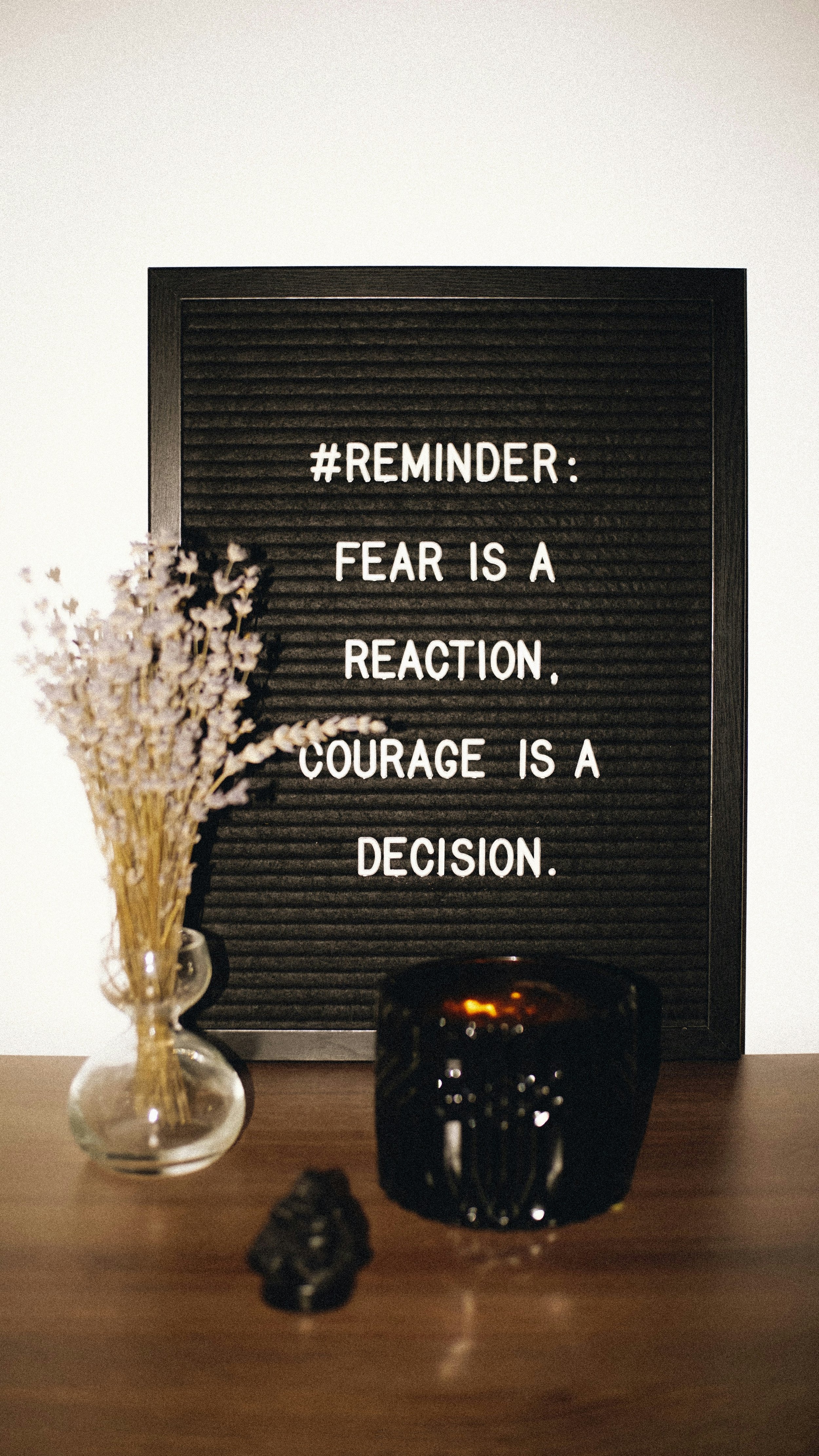
We can’t be courageous without first experiencing fear.
We can’t persevere without first having the option to quit.
Our character is forged in the moments of overwhelm, uncertainty, disappointment, and impossible odds.
We display courage when we stand against evil and injustice, even when we stand alone, even when it costs us comfort, convenience, or approval.
Love without courage is powerless.
Courage is the virtue that empowers us to live out all the others: Faith, Discipline, Hope, Perseverance, and Love
When I feel worn down, I remind myself that each decision is shaping me. It brings me closer or further from the person I want to become.
As we repeatedly choose courageous action in the presence of fear, courage slowly becomes our natural response. It’s what we repeatedly do, so it becomes who we are.
Wisdom: Seeking God’s heart wholeheartedly
The pursuit of wisdom has fascinated me from a young age.
I used to think that if you collected enough information, knowledge would eventually become understanding, and understanding would eventually become wisdom through experience. I viewed it as a benchmark you crossed or a title you earned, as if it were something you get to keep after you earned it.
Now I see it differently.
Wisdom feels more like a flowing stream that nourishes flourishing life.
Proverbs and Psalms remind us that the source of wisdom is God, just like peace, joy, patience, and every other good thing that we long for in our lives.
Wisdom is shared with us when we have humility, courage, and obedience to seek and follow God’s heart for us in every area of our lives.
When the path forward feels unclear, I know it’s time to wholeheartedly realign with the Source.
Being spiritually healthy connects us to the Source that empowers our faith to attempt what exceeds our ability, strengthens us when the road is longer and harder than we expected, and guides us toward the next faithful step.
Serenity Prayer
Many of us are already living in answered prayers and realized dreams.
There are people in our lives, opportunities before us, and strengths within us today that we could not have imagined years ago. Sustainable growth slowly expands our capacity. What once felt impossible slowly becomes familiar.
That’s the heart of transformation.
But lasting transformation can feel overwhelming if we try to do it entirely on our own. Eventually, every meaningful journey brings us to the edge of ourselves, to the place where effort alone is no longer enough.
That’s where surrender becomes strength.
When we invite the Holy Spirit into those hard-to-reach places, we gain access to wisdom, courage, and endurance that go beyond human striving. Alignment with God’s will creates a deeper sense of purpose that pulls us forward even when motivation fades.
That is why the Serenity Prayer is so powerful.
It is not a call to passivity, nor is it permission for self-reliance disguised as control. It is a prayer of humble discernment and the wisdom to know where our responsibility begins and where we need to rest in our trust in God.
God honors effort, but He never wants us to build our identity on earning, entitlement, or exhaustion. We do not earn our worth through endless striving, nor are we owed fulfillment simply because we desire it.
Peace is found somewhere in the middle: faithfully doing the work we are called to while trusting God with the circumstances and outcomes that are beyond us.
So when life feels heavy, uncertain, or like we are losing ground in the areas that matter most, we can hold these two truths firmly:
There are things we can do.
We desperately need God.
Real transformation happens when discipline and surrender work together as we courageously take the next step while trusting God’s perfect timing with the rest.

Faith Encouragement:
Matthew Walker – The best bridge between despair and hope is a good night’s sleep.
James 2:26 – As the body without the spirit is dead, so faith without deeds is dead.
James 1:5 – If any of you lacks wisdom, you should ask God, who gives generously to all without finding fault, and it will be given to you.
Psalms 1:2-3 – but whose delight is in the law of the Lord, and who meditates on his law day and night. That person is like a tree planted by streams of water, which yields its fruit in season and whose leaf does not wither— whatever they do prospers.